


SUPER SIMPLIFIED
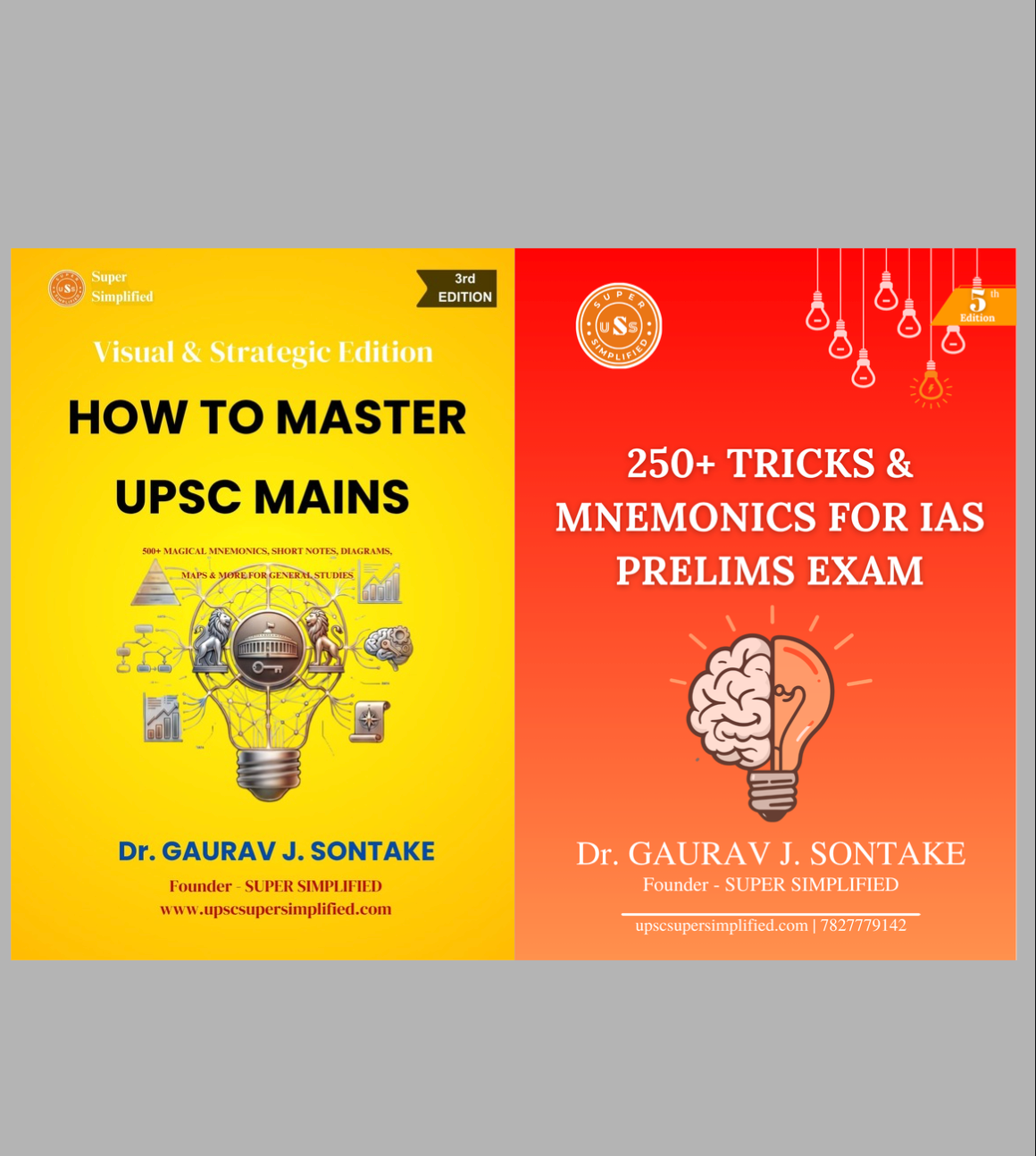
UPSC Mnemonics Study Combo (2 Books Set)
UPSC Mnemonics Study Combo (2 Books Set)
Couldn't load pickup availability
You read it. You understood it. Then you forgot it in the exam hall.
The UPSC Mnemonics Study Combo turns the hardest-to-remember parts of the syllabus into short memory codes, maps and ready answer structures, so what you study stays with you until exam day.
750+ tricks and mnemonics. Two latest 2026 editions. One set for Prelims and Mains.
- 250+Prelims tricks & mnemonics
- 500+Mains mnemonics
- 17MCQ elimination techniques
- 22solved Ethics case studies
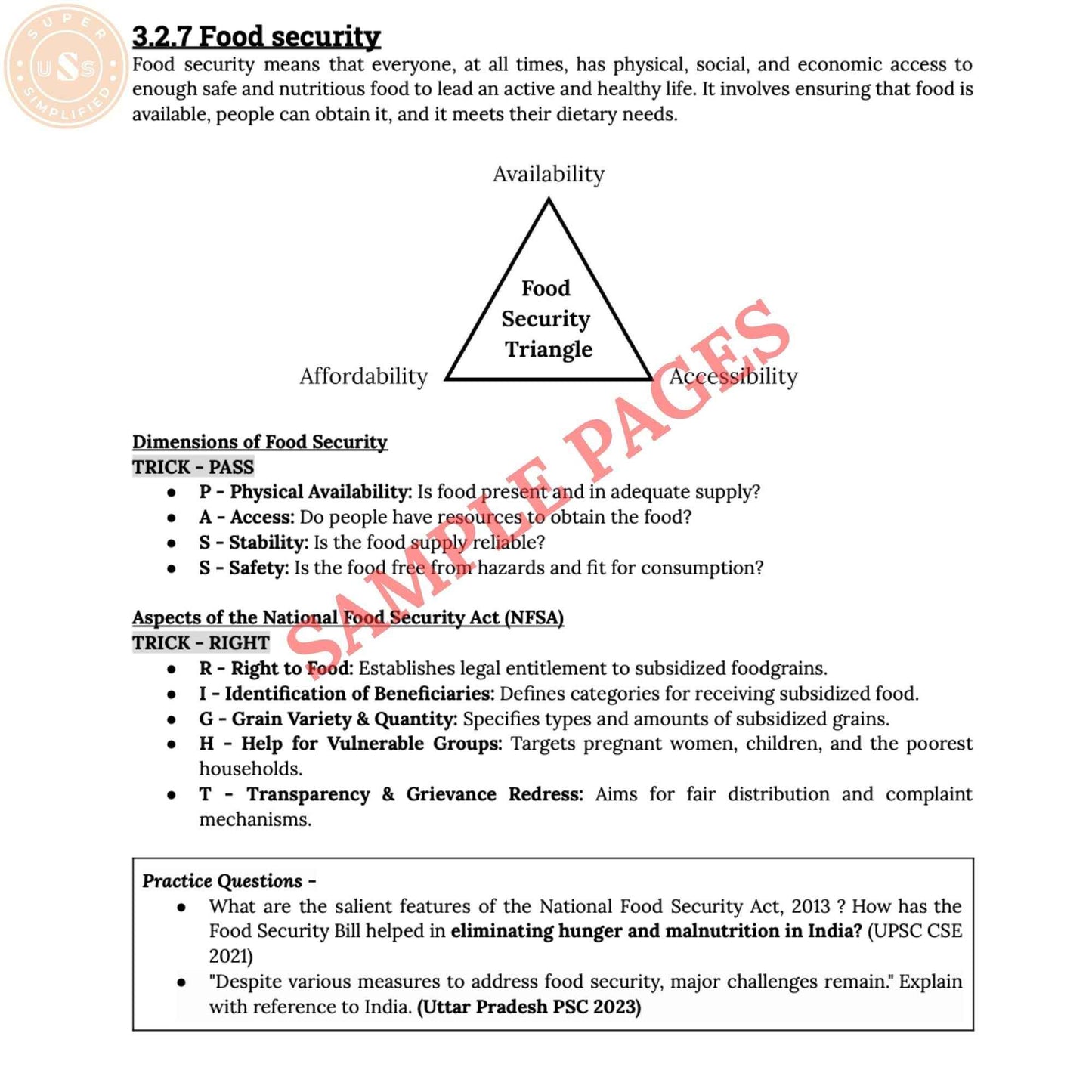
See the pages before you buy
Free sample pages from both books. No sign-up needed.
Why most aspirants lose marks they already studied for
The UPSC syllabus is not difficult to understand. It is difficult to remember. Lists of rivers, hills, border states, committees, articles, indices and reports all blur together after the third revision.
In Prelims, that costs you the two options you could not separate. In Mains, it costs you the six points you knew but could not recall in seven minutes.
Mnemonics for UPSC solve exactly this. One short word or sentence holds a full list in order, and it comes back to you under pressure. This combo gives you those codes ready-made for both stages of the exam, so you do not spend months building your own.
What you get in this combo
250+ Tricks & Mnemonics for IAS Prelims Exam (5th Edition, 2026)
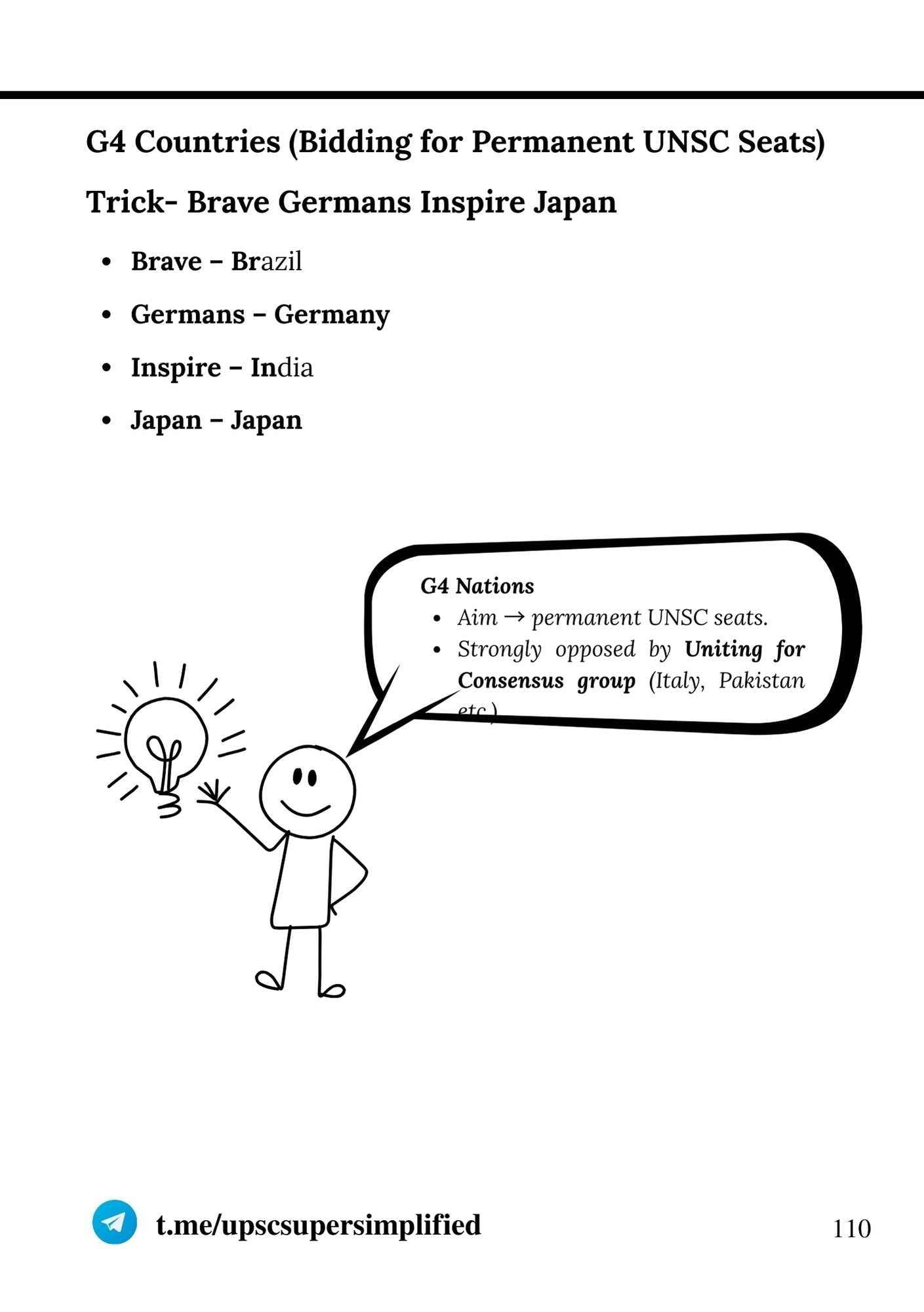
238 pages of one-line memory tricks for the factual topics UPSC keeps asking, most with a simple map, sketch or "Key Facts" box beside them.
- 9 subject sections: Indian Geography, World Geography, Environment & Biodiversity, International Organizations, Economics, Polity, History, Science & Technology, and Miscellaneous.
- One trick per page, so every page is a complete revision unit you can finish in under a minute.
- Key Facts boxes add the recent, exam-relevant details around each topic, such as GI tags, national parks and new discoveries.
- Hand-drawn maps for location-based questions on rivers, islands, hills and neighbouring countries.
- 17 Elimination Logic techniques, each shown on a real UPSC question (including CSE 2025), to help you choose between options when you are not fully sure.
A trick from the book
West-flowing rivers, north to south: SAMANTA
SAbarmati · MAhi · Narmada · TApti
One word. Four rivers. Correct order. You will not forget it now.
How to Master UPSC Mains (3rd Edition, 2026): 500+ Magical Mnemonics, Short Notes, Diagrams, Maps & More for General Studies
A 520+ page Visual & Strategic Edition that covers all four General Studies papers. Every topic is broken into a mnemonic where each letter is one ready point for your answer, with an example attached.
- 450+ topics across GS Paper I, II, III and IV: Geography, Society, Art & Culture, Modern History, World History, Polity, Social Justice & Governance, International Relations, Economy, Agriculture, Science & Technology, Environment, Disaster Management, Internal Security and Ethics.
- "Anatomy of a Good Answer": directive words decoded (discuss, examine, critically analyse), how to write introductions and conclusions, and structure and presentation.
- 6 answer frameworks such as LSNI, PESTLE and 5W1H, which help you generate points even for a question you have never seen.
- PYQ-linked theme lists for each GS paper, so you know which themes the examiner returns to.
- Examples and success stories with each topic, plus updated facts and data, to give your answers real-world weight.
- Practice questions from previous UPSC and State PSC papers after topics.
- Ethics made practical: 12 thinkers, quote-based previous year questions, a guide to solving case studies and 22 solved case studies.
A mnemonic from the book
Why is groundwater declining in India? OVERDRAW
Over-extraction · Vegetation loss · Erratic rainfall · Runoff increase · Depletion of aquifers · Recharge area encroachment · Agricultural practices · Wasteful water management
Eight points for the body of your answer from one word. The book adds an example for each point, the solutions (SMART WATER), success stories and the UPSC questions asked on it.
How this combo helps you
- Remember more in less time. A list that takes ten readings to memorise takes one code to recall.
- Revise the whole syllabus faster. Short pages and short notes make it realistic to revise again in the last weeks before the exam.
- Score in factual Prelims questions. Order-based and list-based questions on geography, environment, polity and organisations become the easy ones.
- Guess smarter, not blindly. The 17 elimination techniques teach you to spot extreme words and other examiner patterns when you know only part of a question.
- Never run out of points in Mains. Each mnemonic gives you a full set of points with examples, enough to build a 150 or 250-word answer.
- Write structured answers. Ready introductions, conclusions and frameworks give every answer a clear beginning, body and end.
- Add value that examiners notice. Diagrams, maps, flowcharts, data and case studies you can reproduce in the answer sheet.
- Handle Ethics with confidence. Thinkers, quotes and 22 solved case studies show you how a good GS IV answer is built.
- One connected preparation. Facts you memorise for Prelims become examples in your Mains answers, so nothing is studied twice.
- Study without strain. Visual, simple and a little funny. A welcome break from dense textbooks that still moves your preparation forward.
- Useful beyond UPSC. The same General Studies content helps in State PSC exams.
Prelims book vs Mains book
| 250+ Tricks & Mnemonics | How to Master UPSC Mains | |
|---|---|---|
| Stage | Prelims (GS Paper I) | Mains (GS Papers I to IV) |
| Edition | 5th Edition, 2026 | 3rd Edition, June 2026 |
| Length | 238 pages | 520+ pages |
| Helps you | Recall facts and eliminate options | Recall points and structure answers |
| Best used | Daily, a few pages at a time, and for final revision | Alongside answer-writing practice |
Is this combo right for you?
Yes, if you
- have read the basics but keep forgetting facts and lists
- are preparing for Prelims and Mains together
- struggle to find enough points while writing answers
- are a working professional with limited study time
- want a fast revision tool for the final months
- are preparing for a State PSC exam with a similar GS syllabus
Not if you
- want a replacement for NCERTs and standard books. These books help you remember and present what you study. They do not replace studying it.
- have not started the syllabus at all. Read the basics of a subject first, then use its tricks.
How to use the two books
- Understand first, then memorise. If a term in a trick is new to you, look it up before learning the code.
- A few pages every day. Do not try to finish in one sitting. Small daily doses with regular revision work best.
- Test yourself. Cover the page, say the code and write the list from memory.
- Write answers with the Mains book open. Attempt the practice questions using the mnemonic, then repeat without looking.
- Make it yours. Add your own notes and examples in the margins.
About the author
Dr. Gaurav J. Sontake is the founder of Super Simplified, Pune, and has been mentoring UPSC aspirants since 2020. He started making mnemonics because he could not remember everything himself and could not find the tricks he needed in one place. He writes, illustrates and designs every book himself.
More than 10,000 aspirants have bought Super Simplified books. The Prelims book is now in its 5th edition and the Mains book in its 3rd, each one updated using feedback from readers.
Frequently asked questions
Are these the latest editions?
Yes. You get the 5th Edition (2026) of 250+ Tricks & Mnemonics for IAS Prelims Exam and the 3rd Edition (June 2026) of How to Master UPSC Mains.
I am a beginner. Can I use these books?
Yes, alongside your basic reading. The tricks work best once you have a basic idea of the topic, so read the subject first and then use the book to lock it in memory.
Are these books enough to clear UPSC?
No single book is. This combo is a memory and answer-writing aid that you use with your standard books, current affairs and practice. It makes what you study easier to recall and present.
Do the elimination techniques always work?
No. They are based on patterns seen in previous years' UPSC questions and will not work for every question. Use them with your own knowledge and judgement, not in place of it.
Is it useful for State PSC exams?
Yes. The General Studies topics overlap heavily with State PSC syllabi, and the Mains book includes practice questions from State PSC papers as well.
Which language are the books in?
Both books are in English.
Should I choose the Physical Book or the eBook / PDF?
The content is the same. Choose the physical set if you like to write notes in the margins and revise on paper. Choose the PDF if you want to read on your phone, tablet or laptop and carry both books everywhere.
I have a question before ordering. Whom do I contact?
Call or WhatsApp our helpline on 7827779142.
Still deciding? Read the sample pages first.
Try three tricks today. If they stay in your head tomorrow, you will know this combo works for you.
Select Physical Book or eBook / PDF above and start remembering what you study.
Share




Intro and conclusion section is very helpful. My answers look more structured now
Frameworks like PESTLE helped me write answers even for unknown questions.
Maps and small drawings make geography tricks easy. Rivers and hills order is finally clear.
Content is good but a few tricks are difficult to remember themselves.
Useful for working people with less time. Ethics case studies are good. Some topics could have more detail